Visions of Research & Applications
The Department of Information Sciences at the University of Education in Lahore, Pakistan, is going to host the International Conference on Recent Advances in Computer Science & Information Technology (RACSIT-2026) on November 24-26, 2026. The conference aims to explore the latest developments in Computer Science and Information Technology and their applications in building a sustainable society. It seeks to facilitate the exchange of ideas and research findings among prominent researchers, scholars, academics, industry experts, and students worldwide. The conference's theme is "Digital Transformation and Innovation for Smart Business and Society," with a primary focus on recent advancements in emerging technologies such as computational intelligence, machine learning, natural language processing, cybersecurity, human-centric computing, and smart systems. By addressing a wide range of topics, the conference promotes collaborative and interdisciplinary research efforts to advance the creation of a sustainable digital society that benefits humanity.
Professional
Pakistan
University of Education, Lahore
2026
Abstract/Poster Submission Deadline
October 16, 2026
Notification of Decision Deadline
October 30, 2026
Conference Dates
November 24-26, 2026
Registration Deadline
October 16, 2026
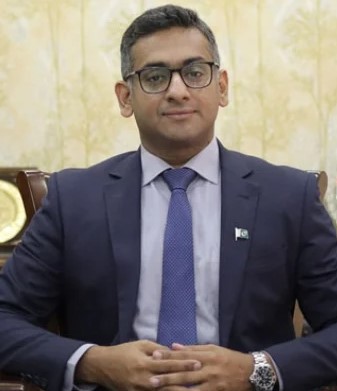
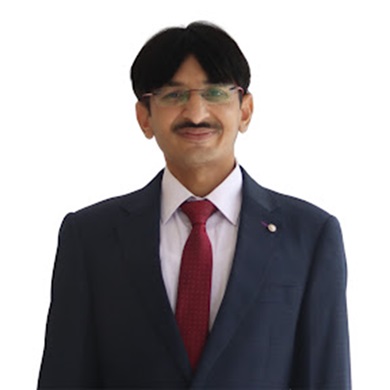
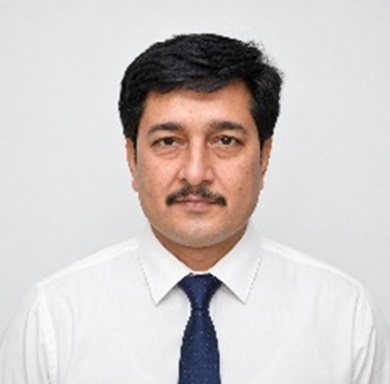
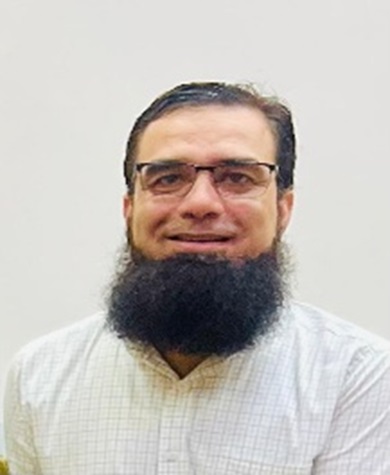
It is my great pleasure to welcome researchers, academicians, scientists, professionals, young scholars, and students from Pakistan and around the world to the International Conference on “Recent Advances in Computer Science & Information Technology” (RACSIT-2026), organized by the Department of Information Sciences, Division of Science & Technology, University of Education, Lahore. We are living in a time of unprecedented technological change. Artificial intelligence, data science, cybersecurity, and intelligent digital systems are not simply transforming computing; they are reshaping the way we learn, work, communicate, and respond to societal challenges. These developments bring immense opportunities, but also demand responsible innovation, interdisciplinary research, and solutions that address real-world needs. RACSIT-2026 provides an important platform for researchers, practitioners, and young scholars to share recent advances, explore emerging technologies, and build meaningful collaborations. The University of Education is committed to academic excellence, translational research, internationalization, and meaningful engagement with all stakeholders. As part of our vision for the future, we are strengthening computing and information sciences as an important component of the University’s academic and research landscape, recognizing the growing role of digital technologies and artificial intelligence across disciplines. RACSIT-2026 reflects this commitment by connecting our academic community with national and international expertise and creating opportunities for research partnerships with meaningful societal impact. I am confident that RACSIT-2026 will stimulate innovative thinking, foster new research collaborations, and provide valuable opportunities for young researchers and students to engage with contemporary developments in computing. More importantly, I hope that the ideas generated here will move beyond academic discourse and contribute to practical solutions, technological development, and positive societal change. I sincerely appreciate the efforts of the Department of Information Sciences, the Division of Science & Technology, and the organizing team for bringing together this important international academic forum. I warmly welcome all participants and look forward to the ideas, collaborations, and possibilities that will emerge from RACSIT-2026.
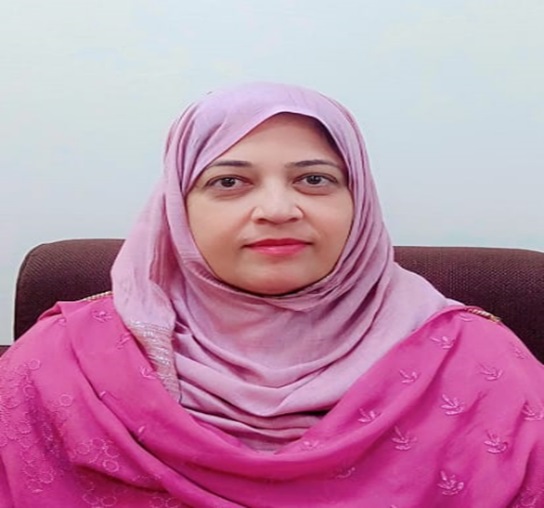
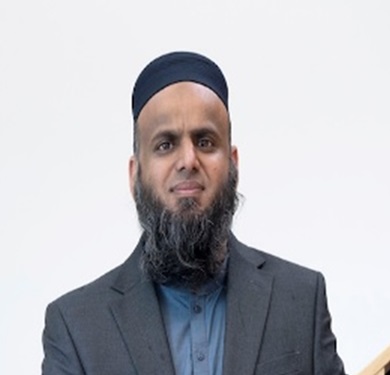
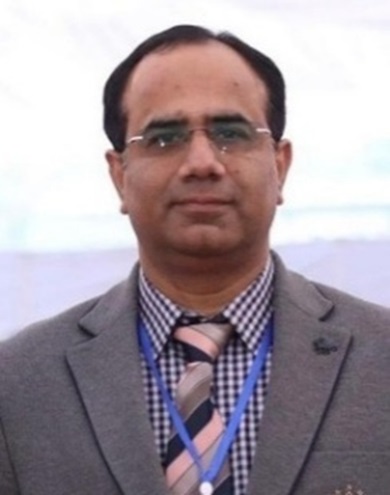
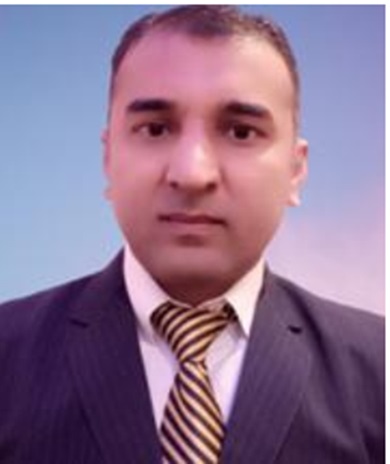
It is a great pleasure and privilege to welcome researchers, academicians, scientists, professionals, young scholars, and students from Pakistan and around the world to the International Conference on “Recent Advances in Computer Science & Information Technology” (RACSIT-2026), organized by the Department of Information Sciences, Division of Science & Technology, University of Education. The rapid evolution of computing and information technologies is continuously transforming the way we learn, work, communicate, and address complex challenges in society. RACSIT-2026 provides a valuable platform for bringing together researchers and practitioners to share innovative ideas, discuss emerging trends, and explore recent advancements across the diverse and ever expanding landscape of Computer Science and Information Technology. The conference is designed to facilitate meaningful academic and professional exchange, ranging from fundamental research to emerging technologies and their practical applications. With the participation of distinguished national and international keynote speakers, researchers, academicians, and students, RACSIT-2026 will provide an inspiring environment for intellectual engagement, knowledge sharing, and the development of collaborative research opportunities. I strongly encourage students, young researchers, faculty members, and professionals to actively participate in this academic gathering and benefit from the expertise, ideas, and experiences of leading researchers and practitioners. I am confident that the conference will broaden perspectives, stimulate innovative thinking, and contribute to advancing research and technological development in the field of computing. I would like to appreciate the efforts of the organizing team for their commitment and dedication in arranging this important academic event. I wish the organizers, participants, researchers, and delegates a highly productive, enriching, and successful RACSIT-2026.
We have highly esteemed speakers from various countries who will share their excellent research in RACSIT 2026
Prof. Dr. Byung-Seo Kim is a Professor in the Department of Software and Communications Engineering at Hongik University, Republic of Korea, where he has been contributing to teaching and research in computer and communication engineering. He received his B.S. degree in Electrical Engineering from In-Ha University, Korea, in 1998, and his M.S. and Ph.D. degrees in Electrical and Computer Engineering from the University of Florida, USA, in 2001 and 2004, respectively. Before joining Hongik University, Prof. Kim worked with Motorola Korea Ltd. as a Computer Integrated Manufacturing Engineer and later with Motorola Inc., Schaumburg, Illinois, as a Senior Software Engineer, where he worked on protocols and network architecture for wireless broadband mission-critical communications. He served as Chairman of the Department of Software and Communications Engineering at Hongik University from 2012 to 2014. His research interests include wireless and wired networks, cooperative networks, Internet of Things (IoT), network architecture, distributed computing, and emerging communication technologies. He is an IEEE Senior Member and has served in editorial and professional roles for several international journals, including IEEE Access. His research contributions encompass numerous scholarly publications and patents in networking and communications.
MUHAMMAD ADNAN KHAN (Senior Member IEEE) is currently a Professor at the Department of Artificial Intelligence at the College of IT Convergence, Gachon University, Seongnam-si, Republic of Korea, Adjunct Professor at Universitas Airlangga (UNAIR), Surabaya, East Java, Indonesia (QS ranking 284), and Chulalongkorn University, Bangkok, Thailand (QS Ranking 221). He completed his Ph.D. from ISRA University, Islamabad, Pakistan, in 2016, with a scholarship award from the Higher Education Commission, Islamabad, Pakistan. He also earned his M.Phil. and BS degrees from the International Islamic University, Islamabad, Pakistan, in 2010 and 2007, respectively, with scholarships from the Punjab Information & Technology Board, Govt. of Punjab, Pakistan. Before joining the aforementioned universities, Khan held various academic and industrial roles in Pakistan and the Republic of Korea. He has been teaching computer science and engineering to graduate and undergraduate students for the past 17 years. He has successfully supervised 12 Ph.D. students, 40+ M.Phil. students, and 70+ undergraduate students, and is currently guiding 5 Ph.D. scholars and 3 M.Phil. Scholars. Khan has published more than 350 research articles with a cumulative JCR-IF of 1800+ in reputed international journals and conferences. He received the University Best Researcher Award in 2018, 2019, 2020, and 2023. According to studies conducted by Stanford University in 2023, 2024, and 2025, published in Elsevier, Khan is listed among the top 2% of impactful researchers worldwide. He has completed multiple industrial funding projects as a PI, Co-PI, and Co-Investigator. He also serves as an editorial member of high-impact journals such as IEEE Transactions on Neural Networks and Learning Systems, Computational Intelligence and Neurosciences, Algorithms, etc., and takes on roles like general chair, co-chair, and speaker for conferences and workshops to promote knowledge sharing and learning within academic and societal realms.
Dr. Nadeem Ahmad is a Professor and Department Head of Computer Science and Technology at Wor-Wic Community College, Maryland US. He holds a dual Ph.D. in Computer Science and Computer and Control Engineering from the University of Potsdam (Germany) and Politecnico di Torino (Italy). With extensive leadership experience across academic administration and higher education, Dr. Ahmad's research focuses on artificial intelligence, machine learning, natural language processing, federated learning, and post-quantum cryptography. Beyond his department leadership, Dr. Ahmad serves as an Adjunct Professional Member at the Data Science Institute at the University of Delaware, US. He is a Senior Member of the IEEE and a Professional Member of the ACM, regularly contributing to international journals as an editor and peer reviewer. Dr. Ahmad is actively involved in advancing STEM policy and quantum education, driving collaborative research in responsible AI deployment and human-centered computing applications.
Professor Ammar Ali Almomani is a distinguished academic and researcher with over 20 years of combined teaching and industry experience in cybersecurity, artificial intelligence, and computer science. He also works as a consultant on various AI and cybersecurity initiatives and is a recipient of the prestigious . Prof. Almomani holds a Ph.D. in Advanced Internet Security and Monitoring from Universiti Sains Malaysia (USM), He has taught over 47 specialized topics in cybersecurity and computer science, including Network Security and Artificial Intelligence. Prof. Almomani has published more than 222+ articles in reputable journals and conferences, with over 166+ indexed in Scopus,10 academic books, His contributions include 10 patents (eight in Germany and two in India) and several ongoing submissions. Recognized among the Top 2% of Global Influential Researchers by Stanford University and Scopus (2023–2025), he also serves as a consultant and expert member of the UAE Research Map (R&D). Prof. Almomani has supervised numerous undergraduate and postgraduate research projects (MSc/Ph.D.) across countries such as the UK, Malaysia, and Jordan. He has chaired and co-chaired various international conferences and journals and maintains an active digital presence with over 120,000 readers and followers on ResearchGate. In addition to his academic and research endeavors, Prof. Almomani has extensive leadership experience, having served as Head of the Research and Innovation Department and IT Department for 6 years. He has contributed to curriculum development, program accreditation (including ABET and AACSB), and the establishment of specializations in both Jordan and the UAE. Prof. Almomani continues to make a significant impact in the fields of cybersecurity, AI and higher education, fostering innovation and collaboration at local and international levels.
Dr. Asad Masood Khattak has over 17 years of industry and academia experience in various capacities, such as Webmaster, Developer, Team Leader, Principal Investigator, Assistant Chair, Graduate Program Coordinator, Assistant Dean for Research, Assistant, Associate, and Full Professor. He has multicultural teaching experience and has taught in Pakistan, China, South Korea, and United Arab Emirates (UAE). His areas of research interests include Data Curation and Representation, Data Mining, Semantic Web, Machine Learning, Deep Learning, Computational Intelligence, Social Media Analysis, e & m-Healthcare, Smart Cities, and Secure Computing. Taking bold, decisive, and definitive actions to solve problems, building strategic alliances, and working in collaborative teams are his strengths. He has experience of leading research teams of over 40 members in over four countries. He has served as an Assistant Chair, Graduate Program Coordinator, and currently serving as an Assistant Dean for Research at the College of Technological Innovation, Zayed University. He is open to explore more and learn more that has mutual benefits for him, his partners, and his institution. He has delivered various keynote speeches, invited talks, invited lectures, and short courses. He has authored over 190 publications (book, book chapters, journal publications, and conference publications). He has a US Patents registered and a Korean Patent. He is a Fellow of the Higher Education Academy (FHEA, United Kingdom), Senior Member of IEEE, and was appointed as an ACM Distinguish Speaker.
Safiullah Khan received the B.Sc. degree in electronic engineering from the University of Engineering and Technology, Peshawar, Pakistan, in 2013, and the M.Sc. degree in electrical engineering from COMSATS University Islamabad (Abbottabad Campus), Abbottabad, Pakistan, in 2017. He earned his Ph.D. degree in computer engineering from Gachon University, Seongnam, South Korea in 2023. He has worked with Research and Development Department, National Radio and Telecommunication Corporation, Pakistan, for two years from 2017 to 2019. He also worked as a Research Assistant in Hongik University, Sejong, South Korea and a Research Fellow at Queen's University, Belfast, Northern Ireland. He is currently serving as an Assistant Professor in Department of Computing and Mathematics at Manchester Metropolitan University. He is also a visiting scholar in Centre of Secure Information Technologies at Queen's University Belfast. His research interests include efficient hardware implementations of cryptographic protocols, blockchain, and network security.
Prof. Dr. Muazzam Ali Khan Khattak (SM IEEE, AAAI, PAS, AIR Net) is currently serving as Director Farabi Research Center for Artificial Intelligence & Cybersecurity as well as Member NADRA Authority Board. He has been listed among the top 2% most highly cited scientists worldwide in 2024 and 2025 and recipient of Gold Medals from the Pakistan Academy of Sciences, COMSTECH, QAU Best Researcher award and Gold Medal from the IEEE Islamabad Section. He has an additional charge of Director of the ICESCO Chair in Data Analytics and Edge Computing and Director of Science & Technology at Quaid-i-Azam University, Islamabad. Prof Khattak is also chairperson of UNESCO National IFAP Committee, Pakistan. Earlier, he served as Associate Dean of Computing and Head of the Postgraduate Program at SEECS, NUST. He completed his PhD in a sandwich program between IIUI and University of Missouri, (UMKC), USA, followed by a postdoctoral fellowship at University of Missouri, USA. Later he joined UMKC as an adjunct professor. Prof. Khattak has authored 03 books and 16 book chapters with leading international publishers, in addition to more than 245 articles in reputed international journals and conferences. His work has earned him recognition as one of the world’s highly cited scientists, with over 7600 citations and an h-index of 46. He is also an elected member of Turkish Academy of Science and Technology (TUBA). His research focuses on Artificial Intelligence based smart solutions for Internet of Things, Internet of Vehicles, Smart Cities, and Information Security. He also holds adjunct professorships at the University of Missouri (USA), Texas American Muslim Universities (USA), Harbin Institute of Technology (China), USAK University (Türkiye), BAKU State University (Azerbaijan), and Margullan University (Kazakhstan). He has been honored with the Pak Academy of Sciences Gold Medal, the Best Performance Award by the Ministry of Education in 2023, and multiple performance-based awards at NUST and QAU from 2015 till 2025, as well 02 best papers awards at International conferences. He has also been nominated for the prestigious civil awards Tamgha-e-Imtiaz and Sitara-e-Imtiaz. Over the course of his career, he has secured national and international research grants amounting to Rs. 1.7 billion from institutions including the Ministry of Education (Kazakhstan), the British Council, the University of Missouri (USA), USAK University (Türkiye), and Margullan University (Kazakhstan). Prof. Khattak serves on international advisory boards at TEXAM (USA), USAK University (Türkiye), Baku State University (Azerbaijan), Harbin Institute of Technology (China) and International Research Network on AI Development and Governance (AIR Net), China. He is also member Senate/BOG at Mirpur University of Science and Technology, AJK and Islamabad University of Health Sciences and Emerging Technologies, Islamabad.
Dr. Muhammad Asif received the PhD degree in Digital Image Processing from Capital University of Science and Technology (CUST), Islamabad, Pakistan, in 2016. Currently he is an Associate Professor in Department of Computer Science, Lahore Garrison University (LGU), Lahore, Pakistan. He has 10 years of teaching experience in different universities of Pakistan including LGU, LLU, UoL and KICSIT. Moreover, he has more than 8 years of industrial experience from USA and Pakistan based organizations, with expertise in Video Codecs, Image, Video and Audio Processing, Video and Audios streaming applications, Embedded System’s Software Design, Development of Security and Surveillance Systems. He has contributed to more than 60 research publications in the domains of Video and Image Processing, Biomedical Imaging, Computer Vision, Machine Learning, Parallel Processing, Embedded System Optimization and Networks Security.
Hazrat Ali is a Lecturer in Artificial Intelligence and Data Science at the University of Stirling, where he leads the HAIMI Lab. His extensive research portfolio spans various areas of Generative AI and Medical Computer Vision. He has authored more than 70 peer-reviewed articles published in top-tier international journals and conferences, including Nature Biomedical Engineering and IEEE Transactions on Image Processing. He is a senior member of IEEE and a Fellow of the Advance-HE. He is the lead editor of two books, Advances in Deep Generative Models for Medical AI published by Springer Nature and Large Language Models in Healthcare, published by CRC press. He serves as Associate Editor at Wiley Applied AI Letters, Nature Scientific Reports, Wiley Engineering Reports, IEEE and as Academic Editor at PeerJ Computer Science. He has twice received the HLF Foundation Travel Award for participation in the Heidelberg Laureate Forum (2017 as a young researcher and 2026 as an HLF alumni). He is the recipient of the 2021 DAAD AI Networking Fellowship Germany, the Kempe Foundation Sweden grant for postdoc research, and the Google DeepMind MenaML winter school travel grant 2026.
Dr. Amjad Ali received his Ph.D. from Electronics and Radio Engineering Department at Kyung Hee University, South Korea in 2015. From 2015-2022, he served as Assistant Professor at the Department of Computer Science, COMSATS University Islamabad, Lahore Campus, Pakistan. He was a Postdoctoral Fellow and Research Professor with the Department of Information and Communication Engineering, Inha university, and with the School of Electrical Engineering, Korea University, South Korea, respectively from 2018-2019. Currently he is working as Postdoctoral Researcher at College of Science and Engineering, Hamad Bin Khalifa University, Doha, Qatar. He published more than 80 research papers in peer reviewed conferences and journals. His cumulative impact factor is 274 with 2183 google scholar citations. He worked on many funded projects. He is editor and reviewer of top IEEE Journals and transactions. He served as a TPC and Chaired sessions for many top IEEE Conferences. His main research interests include 6G networks, intelligent future networks, metaverse, autonomous electric vehicles, cognitive radio networks, machine learning, Internet of Things, cloud and edge computing.
Dr. Farrukh Zeshan is a Tenured Professor in the Department of Computer Science, COMSATS University Islamabad (CUI), Lahore Campus, Pakistan. He received Ph.D. degree from the Department of Software Engineering, Universiti Teknologi Malaysia (UTM). I have published more than 50+ peer-reviewed articles (20-Q1, Cumulative IF 120+ with more than 1050+ citations with 17 H-index) and have supervised 20+ students (Master + Ph.D.). My research interests include Service-Oriented Computing, Intelligent Recommender Systems, Software Engineering, Software Project Management, Knowledge Management, and Self-Organizing Systems. I am a reviewer, technical committee, and editorial member of many reputed national and international conferences and Journals.
Dr. Waqas Haider Khan Bangyal received his Ph.D. in Computer Science. Dr Bangyal is currently an Associate Professor and In Charge Dean of Faculty of Computing at Kohsar University, Murree, Pakistan. Dr. Bangyal has over 50 publications, including book chapters, journal and conference papers. His publications have been published in the top venue, such as IEEE, Elsevier, and Springer. His research interests include Optimization, Machine Learning & Meta-heuristics, Image Processing, and Pattern Recognition. He is a senior member of ACM and IEEE.
Dr. Muhammad Shahid Bhatti is an Assistant Professor in the Department of Computer Science at COMSATS University Islamabad, Lahore Campus, Pakistan. He has approximately 18 years of experience in university teaching and research, with expertise in artificial intelligence, machine learning, deep learning, natural language processing, computer vision, and digital image processing. His doctoral research focused on document-level text tokenization and categorization, with particular emphasis on Urdu natural language processing. His broader research interests include adversarial machine learning, attacks on AI models, model robustness, transformer-based architectures, and AI-driven cognitive manipulation. His research explores both the capabilities and vulnerabilities of intelligent systems and their practical applications. He has authored or co-authored approximately 30 research publications.
Dr. Nauman Riaz Chaudhry is a distinguished individual with a robust academic and professional background in the realm of Computer Science. Commencing his teaching career in 2005 at the University of Gujrat. He is an accomplished researcher with a Ph.D in Cloud-based Modeling and Simulation, Cloud-based Distributed Simulation, and Big Data Analytics from Brunel University London. His expertise spans various domains, including Advanced Computing Infrastructures for Modeling and Simulation, Open Science for Simulation, Hybrid Distributed Simulation, Machine and Deep Learning, and Big Data Analytics. With over 21 years of dedicated teaching experience at esteemed academic institutions, Dr. Chaudhry has demonstrated a commitment to fostering the intellectual growth of students from diverse social and cultural backgrounds. During the pursuit of his Ph.D., Dr. Chaudhry actively contributed to the academic community by engaging in the teaching of M.Sc. Data Science at Brunel University London. These encompassed teaching modules such as Big Data Analytics and High-Performance Computing Infrastructure. His educational influence extends to the London School of Science and Technology, London.
Prof. Dr Tariq Umer (M’16, SM’16) received his Ph.D. in Communication systems in 2012 from the School of Computing & Communication, Lancaster University, U.K, and his Master in Computer Science in 1997 from Bahauudin Zakariya University, Multan, Pakistan. He served the IT education sector in Pakistan for more than 20 years. He joined COMSATS University in January 2007, as an Assistant Professor in the CS department of COMSATS University Islamabad, Lahore Campus, Lahore. Currently, he is working as Tenured Professor at CUI, Lahore Campus. His research interests include Vehicular Ad-hoc Networks, the Internet of Things, Digital Twins, Edge Computing and Cyber Security. He served in the TPC for various international conferences. He is currently an Associate Editor of IEEE ACCESS and served as Editorial team member for Future Generation Computer Systems (Elsevier) for 10 years. He is serving as a reviewer for IEEE Communications Letters, IEEE Wireless Communication Magazine, IEEE Network, IEEE ACCESS, Computers and Electrical Engineering (Elsevier), Journal of Network and Computer Applications (Elsevier), Ad Hoc Sensor Wireless Networks, Wireless Networks (Springer) journal, and the MDPI Journals. He is an active member of the Pakistan Computer Society and Internet Society Pakistan.
Dr. Mubbashar Saddique received the B.Sc. degree in telecommunication engineering from the Institute of Engineering and Technology, Lahore Campus, Pakistan, and the M.S. degree in computer science from COMSATS University Islamabad (Abbottabad Campus), Pakistan, in 2010. He has completed his PhD degree from COMSATS University Islamabad Lahore Campus in 2021. He has attached with different national and international organizations from last 18 years. He worked as a Research Associate at the Department of Cyber Defense Graduate, School of Information Security, Korea University, South Korea. He is currently serving as Assistant Professor at Department of Computer Science & Engineering , University of Engineering & Technology Lahore Narowal Campus. His area of interests are image/video forensic, image/video processing, medical imaging, computer vision, machine learning, artificial intelligence, data mining, and data science.
Dr. Zaigham Mushtaq is an accomplished academic and researcher in Computer Science and Software Engineering. He holds a PhD in Computer Science and currently serves as an Assistant Professor at The Islamia University of Bahawalpur, Pakistan. His research expertise encompasses software engineering, reverse engineering, source-code analysis, program comprehension, design patterns and antipatterns, web engineering, and empirical software engineering. Dr. Mushtaq has contributed to the analysis and understanding of complex software systems, with particular emphasis on multilingual source-code analysis, software design recovery, legacy software modernization, and automated approaches to software engineering. His scholarly work has been published in recognized international journals and conferences, including venues such as IEEE Access and the Journal of Systems and Software. In addition to his research contributions, Dr. Mushtaq is actively engaged in teaching, postgraduate research supervision, and academic development. His work reflects a commitment to advancing innovative and practical approaches to contemporary software engineering and computing.
Prof. Dr. Ghulam Rasool is a distinguished academic, researcher, and Professor of Computer Science at COMSATS University Islamabad (CUI), Lahore Campus, where he also serves as Head of the Department of Computer Science. He holds an MSc in Computer Science from Bahauddin Zakariya University, Multan, an MS in Computer Science from the University of Lahore, and a PhD in Reverse Engineering from the Technical University of Ilmenau, Germany. With more than 25 years of teaching, research, and academic leadership experience at national and international levels, Dr. Rasool has made significant contributions to the field of Software Engineering. His research interests include Reverse Engineering, Design Patterns and Anti-patterns Recovery, Program Comprehension, Source Code Analysis, Software Maintenance, and Empirical Software Engineering. He is also an HEC-approved PhD supervisor. Dr. Rasool has supervised and contributed to research in advanced areas of software engineering and has an active record of scholarly publications. His expertise and extensive academic experience make him a valuable contributor to research, innovation, and professional development in Computer Science and Software Engineering
Dr. Zahoor Ahmed is an accomplished researcher and Assistant Professor at the Faculty of Artificial Intelligence, Shanghai University of Electric Power (SUEP), Shanghai, China. He received his Ph.D. in Control Science and Engineering from Shanghai Jiao Tong University and subsequently served as a Postdoctoral Fellow there. His interdisciplinary research integrates Artificial Intelligence, control theory, digital twins, multi-agent systems, cyber-physical systems, machine learning, network security, and resilient control, with applications in intelligent energy and autonomous systems. Dr. Ahmed has authored research in internationally recognized journals and contributes to the global research community as a reviewer, Guest Editor, and workshop chair. His research has addressed resilient consensus, cyber-attacks, intelligent control, distributed systems, and advanced energy-control technologies. He is a recipient of support from the National Natural Science Foundation of China (NSFC) and the National Foreign Experts Individual Project, and has received international academic awards for research and innovation. His work contributes to advancing secure, intelligent, resilient, and autonomous cyber-physical systems for next-generation infrastructure.
Topics of interest include, but are not limited to
Artificial Intelligence
Bioinformatics
Computer Graphics & Virtual Reality
Computer Simulation
Computer-aided Design/Manufacturing
Computing Ethics
Data Sciences
Image Processing & Computer Vision
Information Security
Internet of Things (IoT)
Multimedia Applications
Neural Networks
Robotics and Automation
Wireless Sensor Networks
Event is going to organize by the Department of Information Sciences
Division of Science and Technology,
University of Education, Lahore
For query please contact us at racsit@ue.edu.pk
| SR.# | Steering Committee RACSIT-2026 | Designation | |
|---|---|---|---|
| 1 | Prof. Dr. Aqif Anwar Chaudhry | Vice Chancellor | Patron in Cheif |
| 2 | Pro-Vice Chancellor | Patron | |
| 3 | Prof. Dr. Shagufta Andleeb | Director | Co-Patron |
| 4 | Prof. Dr. Ikram ullah Lali | Professor | Conference Advisor |
| 5 | Dr. Allah Ditta | Tenured Associate Professor | Conference Chair |
| 6 | Dr. Hannan Bin Liaqat | Associate Professor | Conference Secretary |
| 7 | Dr. Iqra Iqbal | Lecturer | Stage Secretary |